Samling: Santoku kniv

3 produkt

Filtrera och sortera

Filtrera och sortera

3 produkt

3 produkt

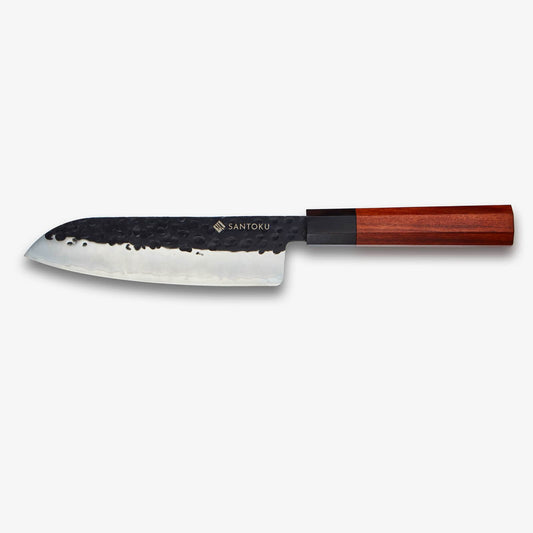
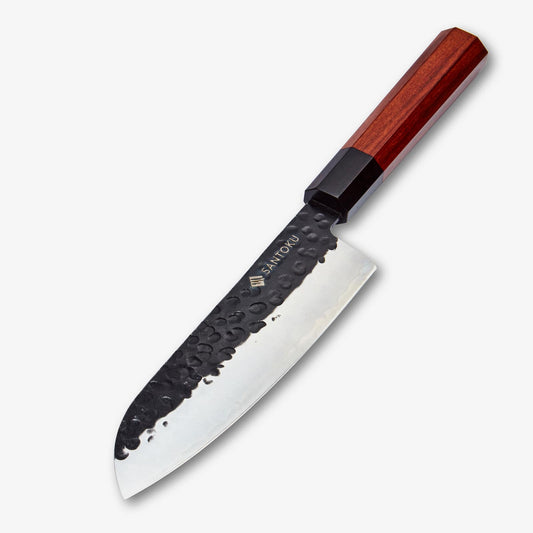
The santoku is the all-rounder of the Japanese kitchen. Its name means "three virtues" — meat, fish and vegetables — and for most home cooks it is the one knife that does nearly everything. Compared with a Western chef's knife it is a little shorter, a little lighter, and has a flatter edge and a rounded sheepsfoot tip.

That flat profile is why people find it easier to live with. There is no rocking technique to learn: you lift, you press down, the food falls away. It also suits a normal-sized chopping board, which matters in a typical UK kitchen.

The three we stock

  • Minato Santoku — £79.99, rated 4.88 from 74 reviews. The cheapest way into proper Japanese steel, with a cleaner, more restrained finish.
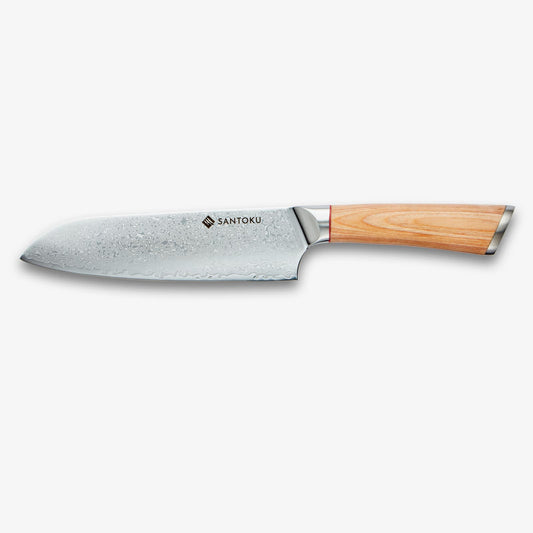
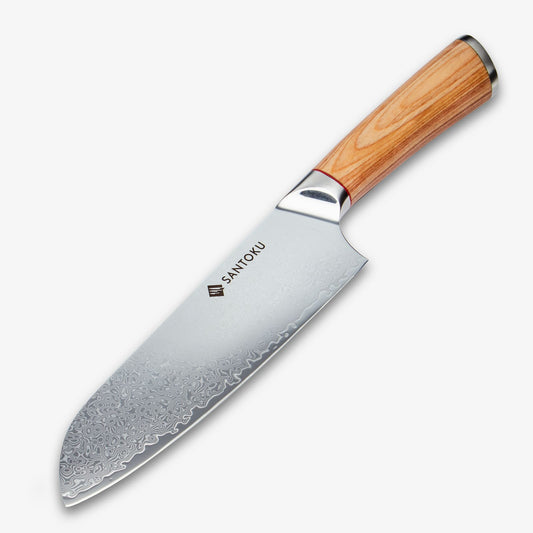
  • Haruta 7" VG10 Damascus Santoku — £89.99, rated 4.88 from 114 reviews. Our most recommended: 67-layer Damascus, wooden handle, and a matching wooden saya included.
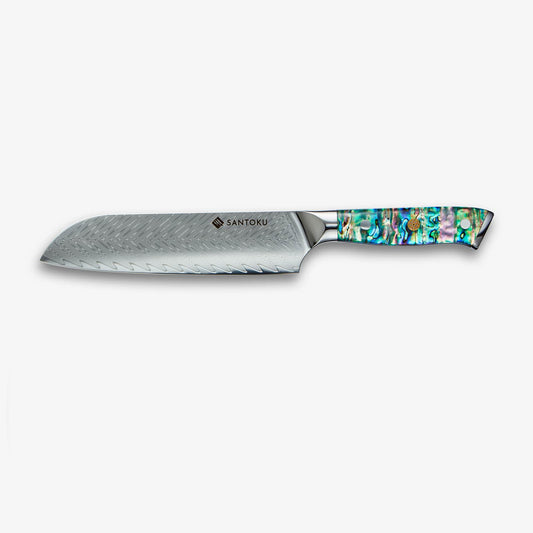
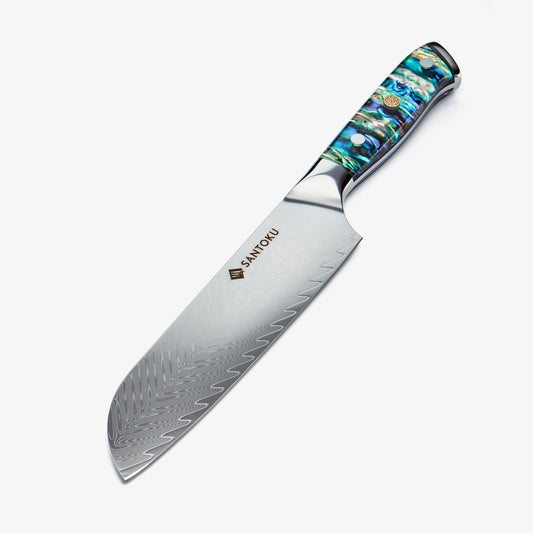
  • Chikashi 7" Santoku — £96.99, rated 4.90 from 145 reviews. The highest-rated and most-reviewed knife we sell, with an abalone handle.

All three share the same VG10 core at roughly 60–61 HRC, so the steel is not what changes across the range — the handle, the finish and whether a saya is included are. Our santoku buying guide compares all five santoku on the site, including the two sold as part of wider ranges.

Santoku or chef's knife?

It depends how you cut. If you chop straight down, the santoku is more comfortable and more precise. If you rock the blade through herbs and garlic, the curve of a chef's knife will suit you better. For pure vegetable work, a flat nakiri is faster still.

Care

Hand-wash and dry straight away, keep it off glass and ceramic boards, and store it on a rack or in its saya rather than loose in a drawer. When the edge stops biting, a whetstone at about 15 degrees per side brings it back — here is how.